Get storm-ready! Be hurricane-prepared BEFORE the season starts.
Does Homeowners Insurance Cover Tree Removal?
When a large tree comes down on your property, figuring out how to remove it is only part of the problem. There is also the question of who pays for the work, particularly when a storm-damaged tree is resting on your roof, blocking your driveway, or scattered across the yard. Since professional tree removal can become expensive when heavy equipment or careful dismantling is required, homeowners naturally want to know whether their insurance policy will help.
Does homeowners insurance cover tree removal? It can, although coverage generally depends on why the tree fell, what it damaged, and the terms of your individual policy. A tree blown onto your home during a covered windstorm presents a very different insurance situation from a declining tree that needs to be removed before it falls.
When Does Homeowners Insurance Cover Tree Removal?
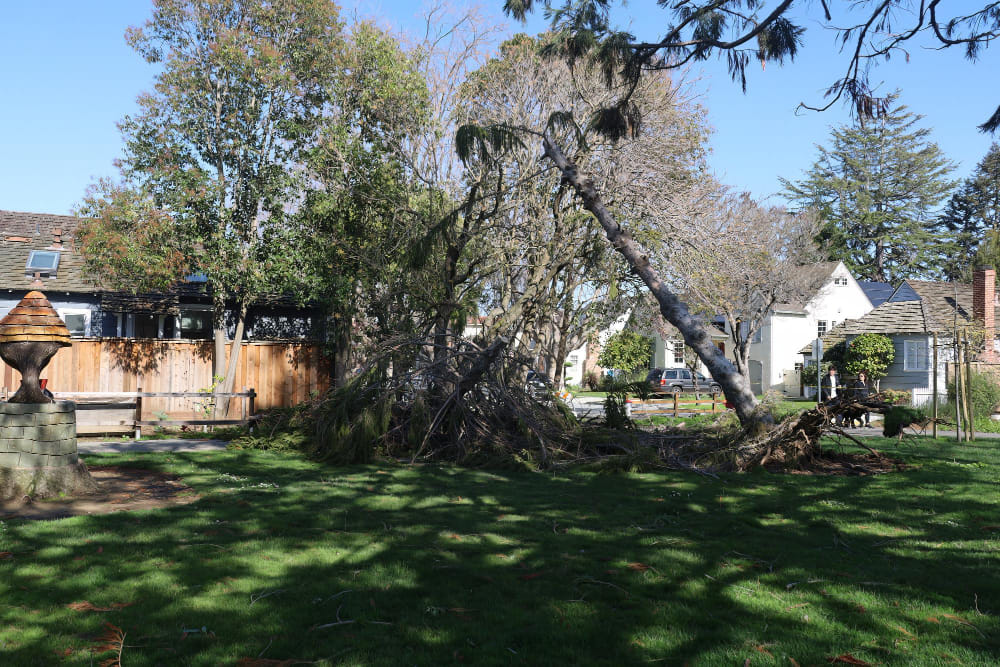
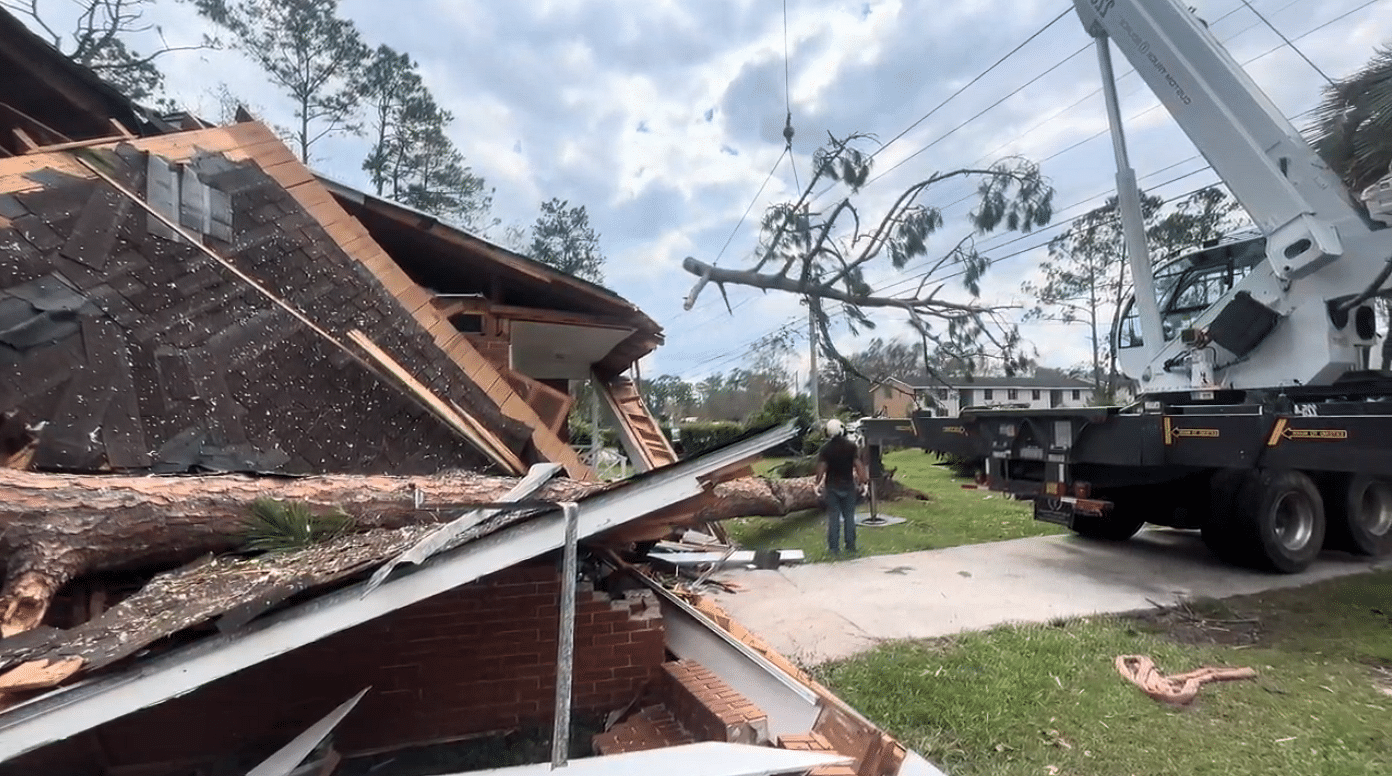
Homeowners insurance may cover tree removal when a tree falls because of a covered event and damages an insured structure. For example, if high winds knock a tree onto your home and damage the roof, the resulting claim may include both repairs to the house and at least part of the cost required to remove the tree.
The cause of the loss matters because insurance policies cover certain risks while excluding or limiting others. Wind, lightning, and other sudden events may qualify under many policies, while damage related to flooding, earth movement, or neglected maintenance can be treated differently.
Even when the loss itself is covered, tree removal may have a separate reimbursement limit. In other words, your insurer might cover substantial repairs to your home while paying only up to a specified amount for removing the tree or hauling away debris.
Property Damage Often Determines Whether Coverage Applies
A fallen tree becomes much more likely to involve homeowners insurance when it damages covered property. If a large pine breaks during a storm and crashes through your roof, for example, the tree is part of a larger property-damage claim rather than simply a landscaping expense.
Coverage may also extend to certain detached structures, such as a garage, fence, or shed, depending on the policy. Because these structures can have different coverage limits than the primary residence, homeowners should check their policy instead of assuming every damaged feature on the property is treated identically.
What If the Tree Falls in the Yard?
A tree does not necessarily have to hit your house for removal coverage to become possible, but a tree that simply falls harmlessly into an open portion of the yard usually creates a weaker insurance claim. In many cases, removing that tree is treated as an ordinary homeowner expense rather than a covered loss.
Some policies make exceptions when the fallen tree blocks an important access point. A tree stretched across the driveway, for instance, could qualify for limited removal coverage under certain policies because it prevents vehicles from reaching or leaving the property. Similar provisions may apply when a tree blocks an accessibility ramp or another necessary entrance.
Policy language varies considerably, however, so it is better to check with your insurer than to assume a particular obstruction will be covered.
Preventive Removal Is Usually Not Covered
Homeowners insurance is intended primarily for sudden and accidental losses, not routine property maintenance. If you have a leaning tree, a tree with substantial decay, or one that simply makes you nervous because it grows close to the house, insurance usually will not pay to remove it before anything happens.
That does not mean you should wait for the tree to fall. Preventive removal may cost far less than dealing with emergency tree work and structural repairs after a failure, particularly when a large tree stands over a home, garage, driveway, or other valuable part of the property.
Does Insurance Cover Dead or Diseased Trees?
Dead and severely compromised trees can make insurance claims more complicated because homeowners are generally expected to perform reasonable maintenance. If a visibly decaying tree has been ignored for an extended period and eventually falls, an insurer may investigate whether the condition of the tree contributed to the loss.
There is an important distinction between hidden decay and an obvious hazard. A tree can look relatively healthy from the outside while containing internal damage that an ordinary homeowner would have had little reason to recognize. That situation is different from leaving a clearly dead tree standing beside the house for years.
Regular tree care can help reduce that uncertainty. If you notice large dead limbs, fungal growth, severe trunk damage, exposed roots, unusual leaning, or major portions of the canopy dying back, having the tree evaluated can help you address the problem before a storm makes the decision for you.
What Happens If Your Neighbor’s Tree Falls on Your House?
Many homeowners assume that if a neighbor’s tree falls onto their property, the neighbor automatically has to pay. That is not necessarily how homeowners insurance works.
If a healthy tree unexpectedly falls during a severe storm, your own homeowners insurance may handle damage to your house, even though the tree originated next door. The location of the tree before it fell does not, by itself, determine financial responsibility.
The situation may be different when there is evidence that the tree was an obvious hazard and the property owner knew about it but did nothing. Questions about negligence can become important in those situations, which is why photographs, written communications, professional evaluations, and previous warnings can matter when a dangerous tree sits near a property line.
What If Your Tree Falls on Your Neighbor’s Property?
The same general concept can work in reverse. If your apparently healthy tree falls onto a neighbor’s house during an unexpected storm, your neighbor may initially turn to their own homeowners insurance for property damage.
If you knew the tree was hazardous and failed to address the problem, liability can become more complicated. Maintaining trees near property lines is therefore useful not only for safety but also for demonstrating that you took reasonable steps to care for your property.
Storm Damage Creates Some of the Most Common Tree Claims
Severe thunderstorms, tropical weather, and high winds can put tremendous forces on mature trees. Saturated soil can weaken root stability, while sudden gusts can break major limbs or split trunks that seemed stable during ordinary weather.
Not every storm-damaged tree immediately falls to the ground. A large limb may remain suspended over the roof, a tree may partially uproot and lean toward the house, or the trunk may split while remaining upright. Whether insurance pays to address those hazards depends on the circumstances and policy language, particularly when no covered structure has actually been damaged yet.
These situations can still require urgent professional attention. A partially failed tree can shift without warning, and cutting the wrong limb can redistribute its weight in ways that are difficult to predict without proper equipment and experience.
Will Homeowners Insurance Cover Hurricane Tree Removal?
Hurricanes can make insurance questions particularly complicated because the same storm may involve extreme wind, falling trees, rain intrusion, flooding, and several different types of property damage.
The specific cause of the damage matters. Wind-related damage may be covered differently from flooding, and homeowners insurance generally does not treat those two risks as interchangeable. In areas affected by hurricanes or named storms, special deductibles may also apply.
Take photographs and video before cleanup begins whenever doing so is safe. Showing where the tree landed, what it damaged, and the condition of the surrounding property can provide useful documentation when you speak with your insurance company.
How Much Will Insurance Pay for Tree Removal?
Even when tree removal is covered, insurance companies generally do not provide unlimited reimbursement. Policies may include a specific dollar limit for removing trees or debris, either per tree or per incident, and those limits can vary considerably among insurers.
Your deductible is another consideration. If the total covered loss is only slightly higher than the deductible, filing a claim may have limited financial benefit. A tree that causes extensive roof or structural damage, on the other hand, may become part of a much larger claim in which tree removal represents only one portion of the total cost.
Before approving nonemergency work, it can be helpful to ask your insurer whether photographs, estimates, or an adjuster’s inspection are required. When immediate action is necessary to protect people or prevent additional property damage, however, safety takes priority.
Document the Damage Before the Tree Is Removed
If the area is safe enough to approach, take clear photographs and video of the tree before cleanup begins. Capture wide shots showing the entire scene as well as close-up images of damage to the roof, gutters, siding, fence, garage, vehicle, or other affected property.
Keep estimates, invoices, photographs, correspondence, and receipts together as the claim progresses. After a widespread storm, insurance companies and tree services may both be dealing with high call volumes, so having organized documentation can make it easier to explain exactly what happened and what work was required.
Why Professional Tree Removal Matters
A fallen tree may look like an oversized pile of firewood, but the forces involved can be surprisingly dangerous. Large trunks can weigh thousands of pounds, while bent or suspended limbs may store enough energy to move suddenly when a cut releases tension.
The risks increase when a tree is resting against a house, tangled with another tree, hanging over a driveway, or interacting with utility lines. Professional tree crews can evaluate where the weight is concentrated and plan a removal sequence designed to avoid making the damage worse.
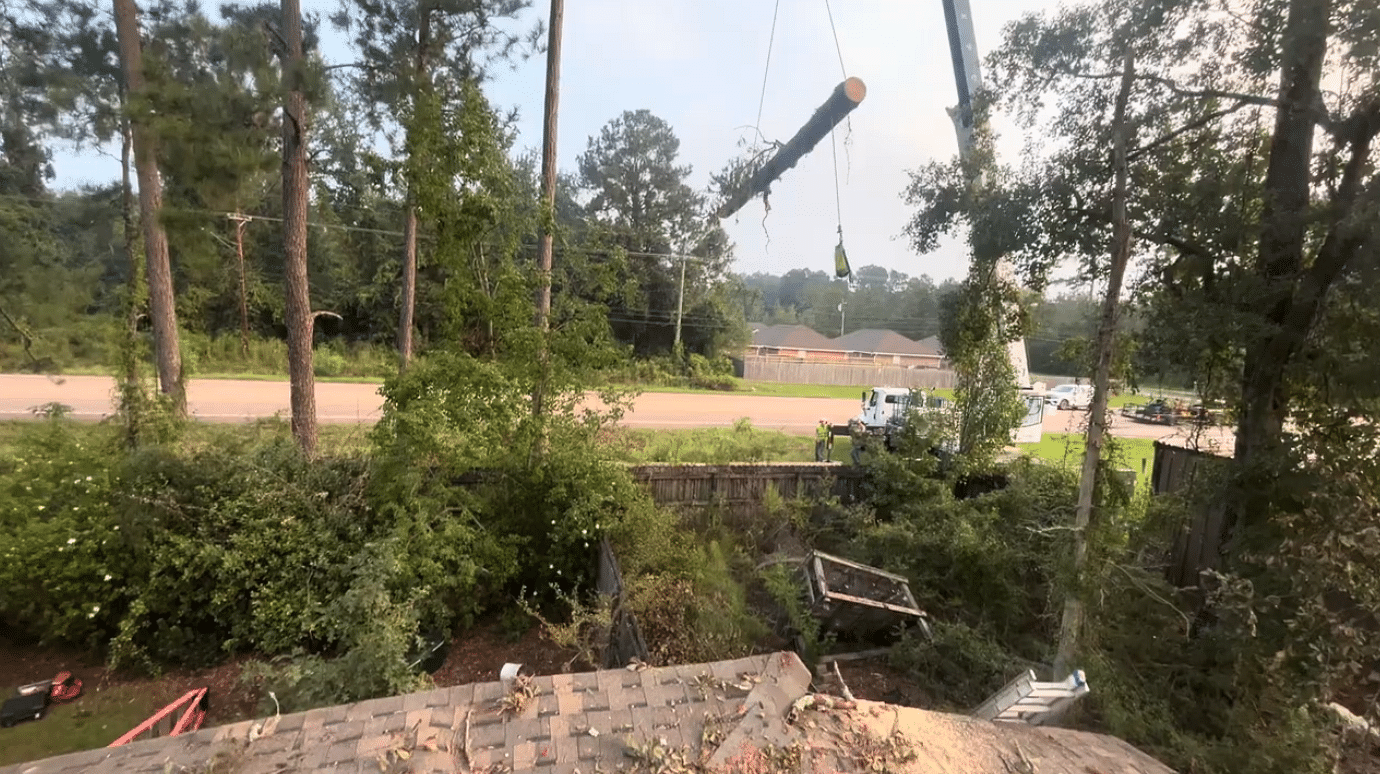
Specialized equipment may also be necessary. Depending on the location and size of the tree, crews may use rigging systems, lifts, loaders, cranes, or other equipment to remove sections safely rather than allowing heavy pieces to fall uncontrolled.
Should You Call Your Insurance Company or a Tree Service First?
When the situation presents an immediate hazard, deal with safety first. If a tree has brought down electrical lines, damaged an occupied part of the house, or created another urgent danger, stay away from the affected area and contact the appropriate emergency or utility service when necessary.
For a stable situation involving property damage, it often makes sense to contact both your insurance company and a professional tree service. Your insurer can explain the claims process, while the tree company can evaluate the physical damage and determine what equipment will be needed.
You do not have to settle every insurance question before beginning necessary work. The priorities are preventing injuries, avoiding additional property damage, and keeping reasonable documentation of the condition before major cleanup changes the scene.
Tree Maintenance Can Reduce the Chance of an Emergency
Insurance can help when unexpected events happen, but preventing a tree failure is usually preferable to filing a claim after one. Routine inspections and maintenance give you an opportunity to identify dead limbs, trunk defects, unstable growth, or declining trees before severe weather exposes their weaknesses.
Sometimes pruning is enough to correct a problem. In other cases, the safest long-term solution is to remove the entire tree, particularly when serious structural defects are present near a home or other valuable property.
Know What Your Policy Says Before the Next Storm
Homeowners insurance can cover tree removal, but the circumstances surrounding the fallen tree usually determine whether coverage applies. Trees that damage homes or other insured structures during covered events are more likely to become part of a claim, while preventive removal, routine maintenance, and trees that fall harmlessly into the yard are more commonly the homeowner’s responsibility.
Knowing your deductible, tree-removal limits, and covered causes of loss before severe weather arrives can eliminate some uncertainty later. It is also worth remembering that insurance coverage and tree safety are separate questions: even when removal will come out of your own pocket, addressing a dangerous tree before it falls can prevent a much larger problem.
Get Help With Dangerous or Fallen Trees
If you have a fallen tree, storm-damaged branches, or a tree that appears increasingly unstable, Tangi Tree can help you determine the safest next step. Whether the job involves removing a tree from a structure, cleaning up storm damage, or taking down a hazardous tree before it fails, professional service can help protect your home while getting the property back to normal as safely and efficiently as possible.


Tangi Tree is an ISA-certified arborist and DBE-certified contractor providing professional tree care across the South, backed by Louisiana state licensing and industry certifications.
Arborist License #2577 #2665
(985) 370-6100 




On Staff
Quick Links
Services
Get in Touch
Northshore: 985-370-6100
Southshore: 504-447-8733
Baton Rouge: 225-277-7724
Mississippi: 601-901-7330
©2026 Tangi Tree Co — All Rights Reserved — Privacy Policy