Get storm-ready! Be hurricane-prepared BEFORE the season starts.
Storm Damage Cleanup After a Tree Falls
A severe storm can leave a property looking completely different in a matter of minutes, especially when a large tree comes down across a yard, driveway, fence, roof, or other structure. Once the weather clears, most homeowners understandably want to begin cleaning up as quickly as possible, yet a fallen tree can create hazards that are not always obvious from the ground.
Storm damage cleanup after a tree falls involves much more than cutting branches and hauling away wood. Uprooted trees can shift, bent limbs may remain under tremendous tension, damaged trunks can roll as weight is removed, and neighboring trees may have suffered structural problems of their own. In some situations, determining why the tree failed can also be important before cleanup begins.
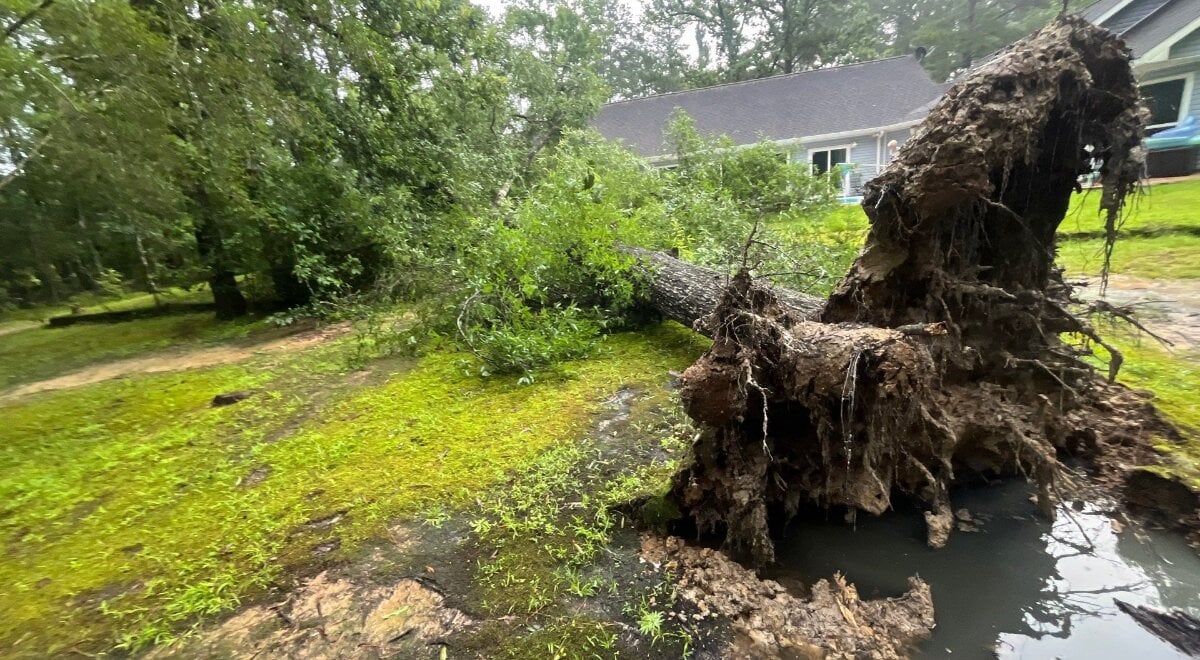
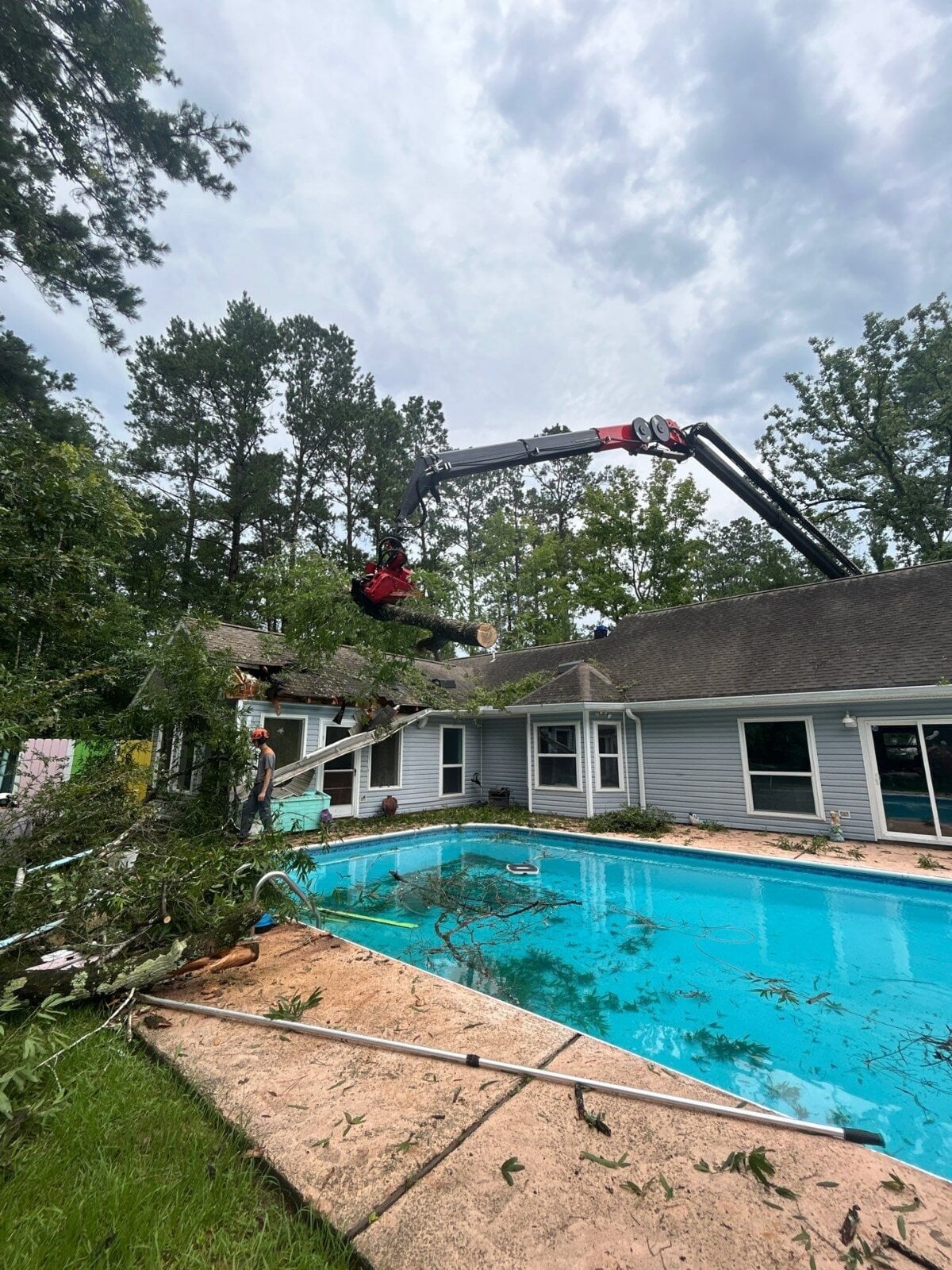
Tangi Tree recently dealt with exactly that kind of situation outside Hammond, where a willow oak came out of the ground with its root plate and landed across a roof, a fence, and part of a swimming pool. The most interesting part was that the tree did not necessarily come down at the height of the storm. By the time it failed, the weather that would naturally receive the blame had already moved through the area.
Start by Making Sure the Area Is Safe
Before worrying about branches, logs, or debris, look carefully at the area surrounding the fallen tree. Storms rarely affect one isolated object, which means the tree lying on the ground may only be one part of the problem. Hanging limbs, leaning trees, damaged electrical lines, weakened structures, and partially uprooted root systems can all remain dangerous after the weather has passed.
Keep people and pets away from the affected area until you have a better understanding of what happened. A tree that appears settled can still move as its root plate shifts, supporting branches break, or weight is removed during cleanup.
Looking overhead is equally important. Large limbs sometimes break without reaching the ground, leaving heavy sections suspended in neighboring trees where they can fall without much warning.
A Fallen Tree May Tell a Bigger Story
It is natural to assume that a tree lying on the ground after bad weather was simply blown over by the storm, but tree failures can be more complicated.
During Tangi Tree's willow oak project outside Hammond, the tree had uprooted completely, leaving the root plate exposed and creating significant damage when it landed on the homeowner's property. The region had recently experienced heavy rainfall and saturated soil, which was an important part of understanding the failure.
When the soil surrounding a tree becomes heavily saturated, the roots may have a much harder time holding the tree upright. Add the enormous weight of a mature canopy, an existing lean, root problems, or previous structural weaknesses, and the tree may fail even after the strongest winds are gone.
A compromised tree does not necessarily need hurricane-force wind at the exact moment it falls. Sometimes the storm creates the conditions, while gravity and weakened soil finish the job hours or even days later.
What Should You Do If a Tree Falls on Your House?
When a tree lands on a house, garage, shed, or another structure, protecting people should come before protecting the building. Avoid entering areas where the roof, walls, ceilings, or structural framing appear unstable, particularly when you notice cracking, shifting, sagging, or other signs of significant damage.
Do not assume that pulling the tree away from the structure will immediately make things better. A trunk or large limb may be resting against damaged sections of the building, and changing its position can redistribute thousands of pounds of weight.
Professional removal often involves dismantling the tree in controlled sections rather than attempting to move everything at once. The sequence matters because every branch or trunk section that is removed changes how the remaining tree is supported.
Photograph the Damage Before Cleanup Begins
Once everyone is safe, documenting the scene can be extremely valuable, particularly when a home, fence, pool, vehicle, or another insured structure has been damaged.
Take photographs from several safe angles before major pieces of the tree are moved. Include the tree itself, the point where it failed, exposed roots, surrounding soil, damaged structures, and the overall position of the trunk and canopy.
The willow oak project near Hammond is a good example of why these details matter. With the root plate still exposed and the surrounding ground visible, a trained professional could examine conditions that would become much harder to evaluate once the tree had been cut apart and hauled away.
A few photographs taken before cleanup may preserve information that cannot be recreated later.
Do Not Automatically Guess Why the Tree Fell
Homeowners naturally try to explain what happened when speaking with contractors, neighbors, or an insurance company. After a storm, saying that a tree “blew over” may seem like an obvious description, yet it may not accurately reflect the actual cause of failure.
Tangi Tree is not an insurance adjuster, and homeowners should rely on their insurance professionals for questions about coverage and claims. From a tree-care perspective, however, there is an important distinction between describing what you observed and assuming why it happened.
If a tree came down following severe weather, you know that the tree fell and that a storm occurred. You may not know whether wind, saturated soil, root deterioration, structural weakness, or a combination of factors caused the failure until someone examines the tree.
Sticking to the facts allows the condition of the tree to be evaluated rather than turning an initial assumption into the accepted explanation.
Why Can the Cause of Tree Failure Matter?
Insurance policies vary substantially, including the deductibles and coverage that may apply to different types of storm-related damage. Some Louisiana homeowners may have separate provisions or deductibles associated with hurricane or wind claims, which makes it important to understand the actual language of the individual policy rather than assume every loss will be handled in the same way.
That is another reason documenting a tree before removal can be useful. The condition of the roots, soil, trunk, and failure point may provide information that cannot be determined from a weather report alone.
A storm occurring shortly before a tree falls does not automatically explain the biological or structural reason the tree failed.
Certified Arborist Evaluation Can Provide Valuable Context
A trained arborist looks at more than the fact that a tree is lying on the ground. The root plate, surrounding soil, trunk condition, decay, previous lean, branch structure, and visible failure points can all provide clues about what happened.
In the Hammond-area willow oak project, saturated soil was an important part of the situation. When the entire root plate comes out of the ground, the exposed root system and surrounding conditions can provide useful information about how the tree lost stability.
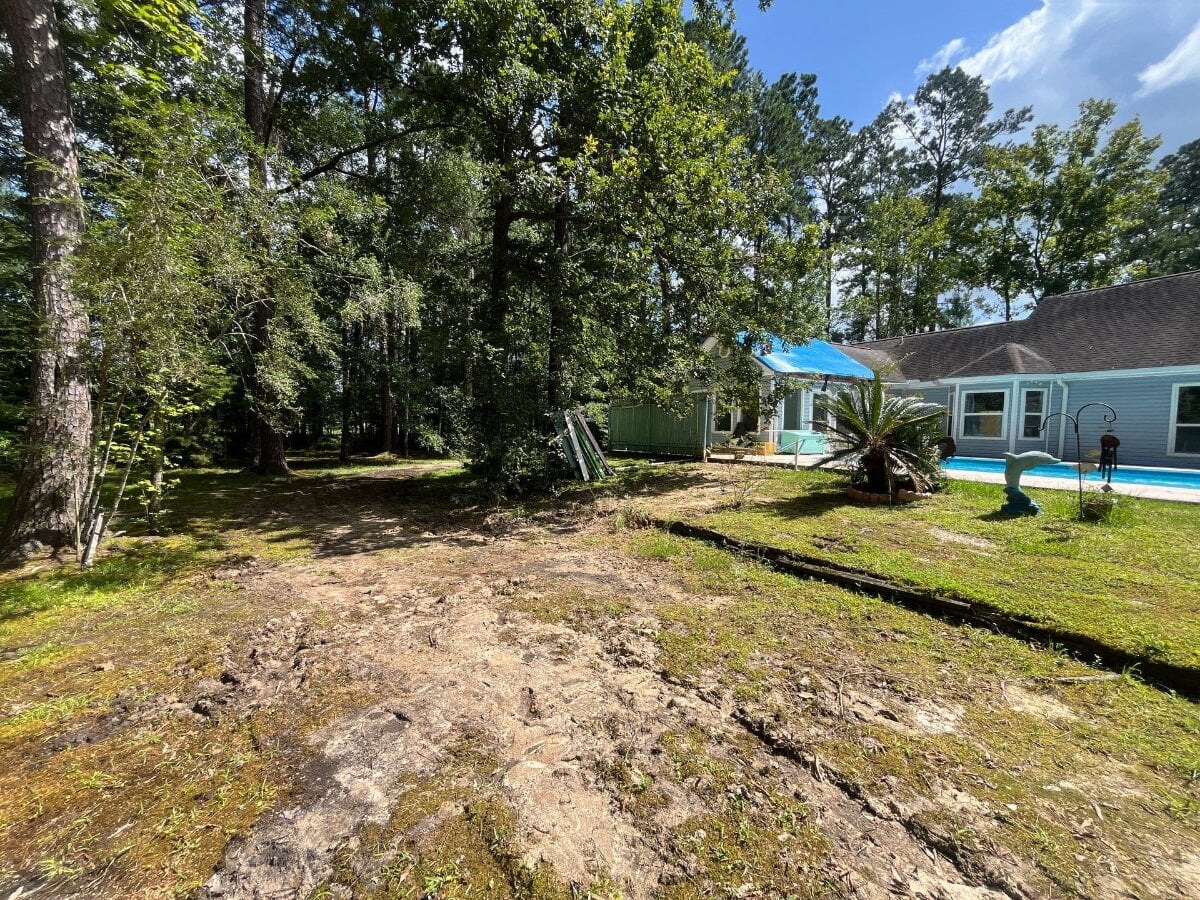
That opportunity does not last forever. Once equipment arrives, the trunk is cut into sections, roots are disturbed, and debris is hauled away, some of the most useful evidence disappears with it.
Fallen Trees Can Be More Dangerous Than They Look
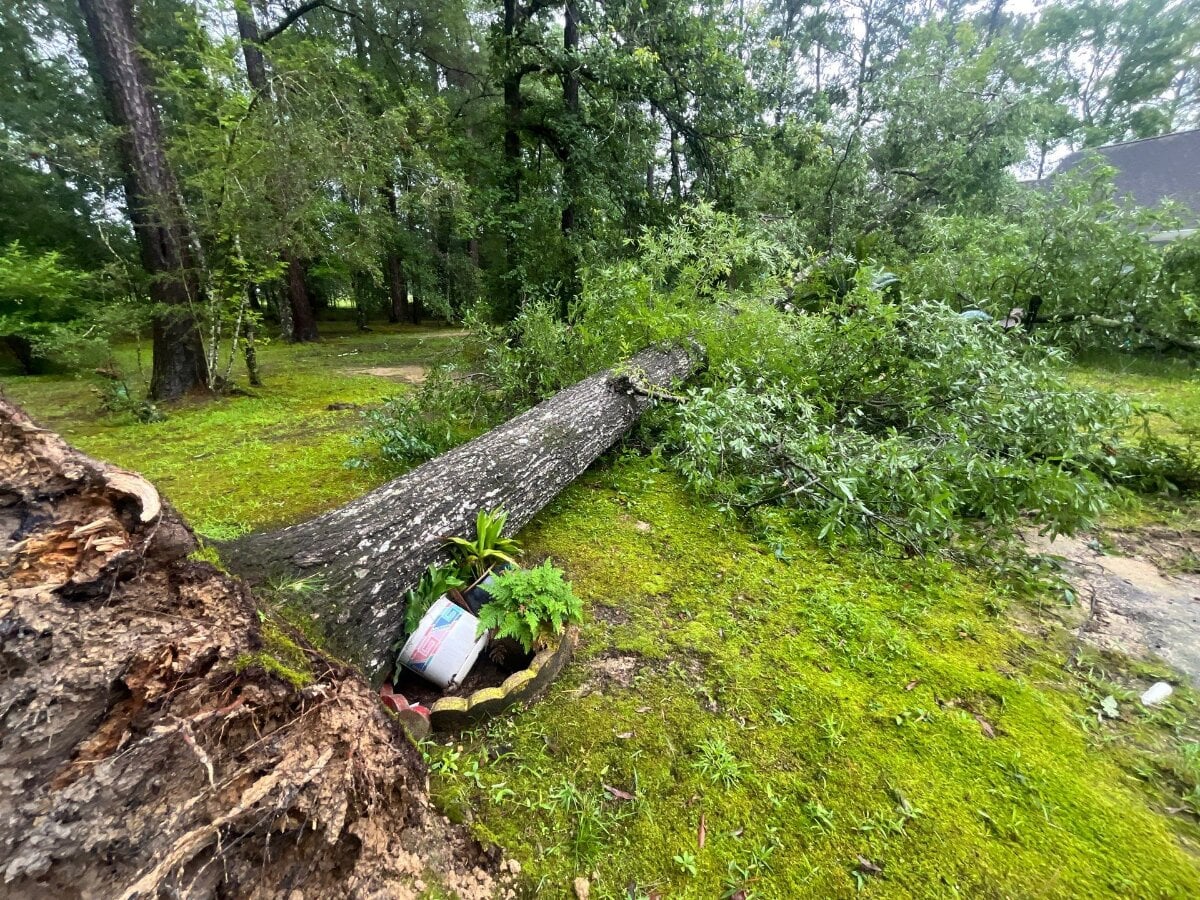
A tree lying horizontally may seem much less threatening than a standing tree, yet damaged trees can contain enormous amounts of stored energy.
Bent limbs can behave almost like springs. Sections of trunk may be compressed between the ground and other branches, while partially uprooted roots can pull against the remaining tree. Cutting one piece can suddenly release pressure somewhere else.
This is why simply grabbing a chainsaw and working from one end of the tree to the other can be dangerous. A cut made in the wrong location can cause a branch to snap, a trunk to roll, or a suspended section to drop unexpectedly.
Professional crews evaluate how the tree is supported before deciding where cutting should begin.
Assess the Trees That Are Still Standing
The tree on the ground naturally receives the most attention, but surrounding trees should not be ignored.
Strong winds and saturated soil can loosen root systems without completely uprooting a tree. Large branches may crack while remaining attached, and trunks can develop splits that are difficult to see from a distance.
Look for newly leaning trees, raised soil around the roots, exposed roots, cracked trunks, hanging branches, or significant changes in the canopy. Keep your distance from anything that appears unstable.
A tree that survived the first storm may still be vulnerable during the next period of wind or rain.
What Happens When a Tree Blocks a Driveway?
A tree across a driveway creates an immediate practical problem, especially when vehicles are trapped or access to the property is restricted.
Large trees should still be approached carefully, even when opening the driveway feels urgent. A trunk stretched across uneven ground may have enormous weight resting on only a few contact points, causing different sections to remain under compression or tension.
Professional crews can often prioritize creating safe access before continuing with the rest of the removal. Once the necessary portion of the driveway is open, cleanup of the remaining trunk, limbs, and debris can continue in a more controlled manner.
Broken and Hanging Limbs Need Special Attention
Storm damage does not always bring down the entire tree. Sometimes the trunk stays upright while major branches break, split, or become partially detached.
These limbs can be especially dangerous because they may remain high above the ground after the storm has passed. A large branch suspended above a roof, driveway, sidewalk, or yard can weigh hundreds of pounds or considerably more.
Avoid trying to pull hanging limbs down with vehicles, improvised ropes, or other makeshift methods. The direction in which the limb falls may be very different from what you expect once the remaining wood fibers give way.
Can a Storm-Damaged Tree Be Saved?
Not every tree that suffers storm damage needs to be removed. A healthy tree may lose several branches while keeping a stable trunk, sound root system, and enough remaining canopy to continue growing.
The severity and location of the damage make the difference. Minor broken branches may require professional pruning, while a split trunk, major root failure, extensive decay, or a significant change in lean can make preservation much less practical.
A proper assessment can help determine whether damaged portions can be removed without leaving the tree structurally compromised.
What Happens to the Root Plate and Stump?
When a tree uproots completely, cleanup can become more complicated than standard tree removal.
The root plate may rise several feet out of the ground while bringing large quantities of soil with it, leaving behind a substantial hole. In other cases, portions of the root system stay embedded while the trunk breaks or separates nearby.
Once the tree has been dismantled and removed, the remaining root mass, stump, and disturbed soil can be evaluated separately. Stump grinding or additional site cleanup may be appropriate depending on the condition of the area and how the homeowner plans to use the space afterward.
Cleanup Should Protect the Rest of the Property
The goal of storm damage cleanup is not simply to make the tree disappear. A careful removal should also minimize additional damage to the property whenever conditions allow.
The willow oak outside Hammond presented several obstacles at once because the tree was resting across a roof and fence while extending into the swimming pool. Removing a tree in that position requires far more planning than cutting up a tree lying in the middle of an empty yard.
Large logs, equipment, saturated lawns, landscaping, pavement, pools, fences, and structures all influence how the work should proceed. Controlling the sequence of removal helps reduce the possibility of turning existing storm damage into additional cleanup.
Storm Damage Can Reveal Problems That Were Already Developing
When a tree fails, the exposed wood and roots sometimes reveal defects that were hidden while the tree was standing.
Decay, root deterioration, cavities, old wounds, poor structural attachments, and other weaknesses may become visible only after the tree breaks or uproots. Nearby trees growing under similar conditions may deserve attention as well.
Routine tree inspections cannot prevent every storm-related failure, but they can identify some of the conditions that increase risk. Dead branches, significant lean, weakened unions, root problems, or deteriorating trunks are much easier to address before a tree is lying across a roof.
Get the Right Eyes on Storm Damage Early
One of the most useful lessons from Tangi Tree's willow oak project is that cleanup should not always begin with assumptions.
A tree can fall during a storm, immediately after one, or even later when the weather seems calm. Saturated ground, weakened roots, structural defects, tree weight, and wind can interact in ways that are not obvious when you first walk outside and see the damage.
When conditions are safe, photograph what happened before the tree is disturbed, avoid guessing about the cause, and have the tree evaluated when there is uncertainty about why it failed. Seeing the root plate, surrounding soil, trunk, and failure point in their original condition can provide information that disappears once removal begins.
Call Tangi Tree for Storm Damage Cleanup
A fallen tree can leave behind far more than branches and logs. It may involve damaged structures, unstable limbs, exposed roots, blocked access, saturated soil, and questions about whether other trees on the property remain safe.
Tangi Tree provides professional storm damage cleanup and tree removal for homeowners dealing with fallen, uprooted, or damaged trees. From complicated removals near homes, fences, and pools to evaluating why a tree failed in the first place, the goal is to approach the situation carefully rather than simply start cutting.
If a tree comes down on your property, especially when the cause is not immediately clear, getting experienced eyes on the situation before everything is moved can make a meaningful difference. Contact Tangi Tree for an honest assessment and professional help getting your property cleaned up after the storm.


Tangi Tree is an ISA-certified arborist and DBE-certified contractor providing professional tree care across the South, backed by Louisiana state licensing and industry certifications.
Arborist License #2577 #2665
(985) 370-6100 





On Staff
Quick Links
Services
Get in Touch
Northshore: 985-370-6100
Southshore: 504-447-8733
Baton Rouge: 225-277-7724
Mississippi: 601-901-7330
©2026 Tangi Tree Co — All Rights Reserved — Privacy Policy